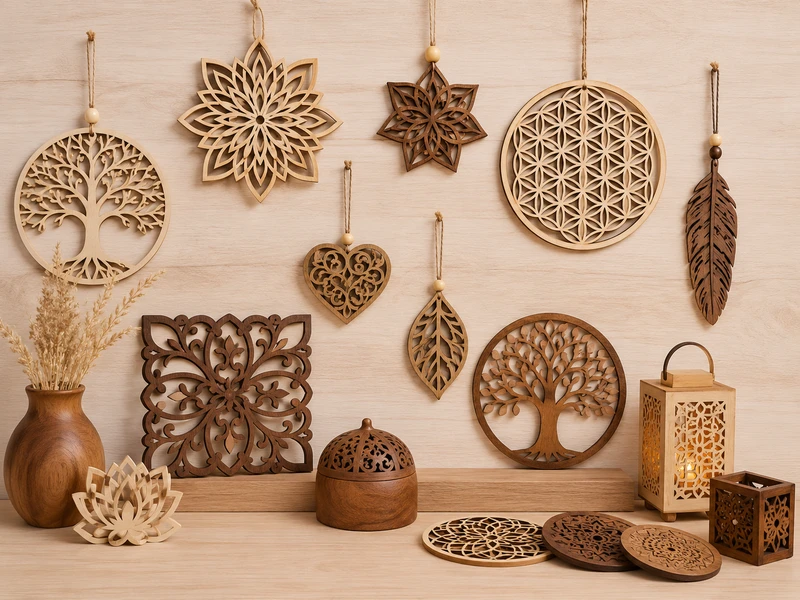
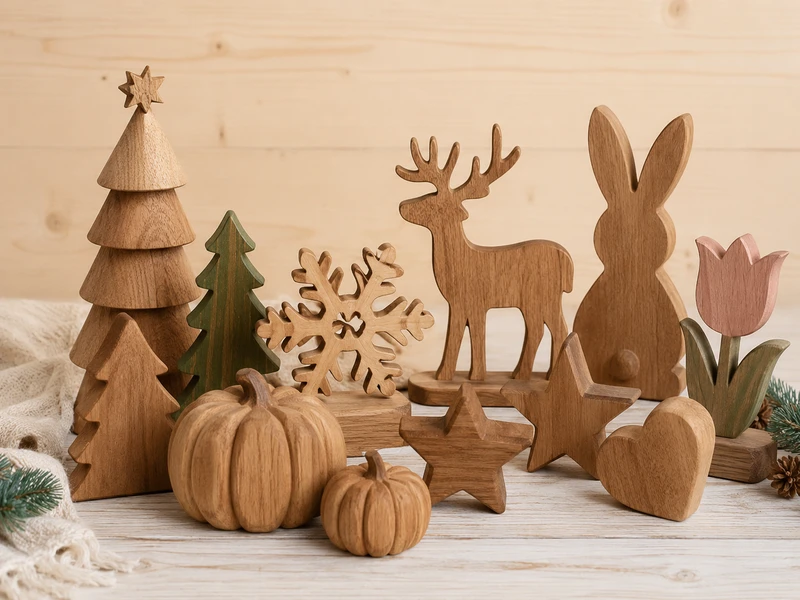
A home decor brand developed a 12-piece collection of wooden wall art, tabletop figures, and candle holders. Each piece had a different shape, but they all needed to share the same finish color, wood grain direction, and overall feel. The challenge was not producing each piece individually — it was maintaining visual consistency across the entire collection when different pieces used different wood types and production methods.
Working with a wooden home decor manufacturer for a product collection is different from ordering single products. The manufacturer needs to understand the collection as a whole — the shared visual language, the material relationships, and the retail presentation. This guide covers what brands should communicate and confirm when developing custom wooden decor collections.
Defining the Collection Style
Before contacting a manufacturer, define the visual identity of your collection. This goes beyond individual product designs:
- Style direction — rustic farmhouse, modern minimalist, Scandinavian, bohemian, traditional, or coastal. The style guides wood choice, finish, and detail level.
- Color palette — 3-5 colors that appear across the collection. Natural wood tones, painted accents, or a combination. Provide Pantone or RAL references for painted finishes.
- Texture and finish — smooth and polished, rough and rustic, distressed and weathered, or natural and oiled. The finish must be consistent across all pieces in the collection.
- Scale relationship — small, medium, and large pieces that look like they belong together. A 5cm ornament and a 30cm wall art piece should share design language.
Material Choice Across the Collection
Different pieces in a collection may require different wood types based on their function and production method. The key is making sure different woods look cohesive when finished:
- Pine — affordable, takes paint well. Good for painted collections where wood grain is not visible.
- Birch — smooth, consistent grain. Works well for natural and stained finishes where grain matters.
- Beech — hard, durable, fine-grained. Premium feel for tabletop pieces and figurines.
- MDF — uniform surface for painted products. No grain variation — consistent color across large batches.
- Bamboo — sustainable, distinctive grain. Good for eco-themed collections.
If your collection mixes wood types, ask the manufacturer to produce finish samples on each wood type before production. The same stain looks different on pine than on beech — you need to see this before committing.
Finish Consistency Across Pieces
The most common quality issue in home decor collections is finish inconsistency. A wall art piece and a candle holder from the same collection should look like they belong together. This requires:
- Batch-controlled pigments — all paint and stain mixed from the same batch before production starts.
- Standardized application — same spray pressure, coat count, and drying time across all pieces.
- Reference samples — an approved physical sample for each piece that production matches against.
- Color tolerance — define acceptable color variation (Delta E value if you have a spectrophotometer, or visual comparison under controlled lighting).
Practical Example: Mixed-Material Collection
A home decor brand ordered a 10-piece collection: 4 wall art pieces (laser-cut birch), 3 tabletop figures (CNC-carved beech), and 3 candle holders (turned pine). All needed a "warm white" painted finish. The same white paint looked slightly different on each wood type — warmer on pine, cooler on birch. The solution: we adjusted the paint formula for each wood type to achieve a visual match, then documented the formulas for future reorders.
Collection Planning
A well-planned collection has variety within a consistent framework:
- Product mix — wall decor, tabletop pieces, functional items (trays, boxes), and accent pieces. Each category serves a different retail shelf.
- Price tiers — entry-level, mid-range, and premium pieces within the same visual family. This lets retailers offer the collection at multiple price points.
- Size range — small (under 10cm), medium (10-25cm), and large (25cm+) pieces. The size range affects shelf display and packaging.
- SKU count — 8-15 styles is typical for a launch collection. Too few looks incomplete; too many overwhelms buyers.
Packaging for Retail
Home decor products need packaging that protects during shipping and presents well on retail shelves. Options include:
- Individual boxes — branded boxes with tissue wrapping. Premium presentation but higher per-unit cost.
- Kraft wrapping — eco-friendly kraft paper with branded sticker. Popular for natural and rustic collections.
- Hang tags — branded tags with product info, barcode, and care instructions. Low cost, easy to apply.
- Bulk export packing — individual wrapping in foam or tissue, then packed in export-grade cartons with dividers.
Developing a custom home decor collection? Send us your collection style, reference photos, size range, finish direction, SKU count, quantity, and packaging plan. We will provide a feasibility assessment and detailed quote within 48 hours.
Start Your CollectionBulk Production Control
For collections with multiple pieces, production control matters more than for single-product orders. The manufacturer needs to:
- Produce all pieces in the same production window to ensure finish consistency.
- Use the same paint batch across all pieces.
- Inspection against approved samples for each piece in the collection.
- Pack complete collection sets together when possible for retail distribution.
If pieces are produced in different batches, the finish can drift slightly between batches. For a cohesive collection, request that all pieces be produced in a single production run.
FAQ
Can you produce a full home decor collection from scratch?
Yes. Share your style direction, reference images, and target price range. Our team develops production-ready designs for each piece in the collection. We provide samples for every piece before bulk production.
How do you ensure finish consistency across different product types?
We use batch-controlled pigments and standardized application methods. For collections mixing wood types, we adjust paint formulas per wood type to achieve visual consistency. Every piece is checked against its approved reference sample.
What's the typical MOQ for a home decor collection?
200-500 pieces per style. For a 10-piece collection, that's 2,000-5,000 pieces total. Pricing improves at higher quantities. We accept smaller trial orders for new brands testing the market.
Can you produce seasonal and year-round collections?
Yes. Year-round collections are always in production. Seasonal collections (Christmas, Easter, etc.) require earlier planning — 4-6 months before the selling season. Read our guide on planning seasonal decoration collections for detailed timelines.
Related Resources
Explore our wooden ornaments, seasonal decorations, and custom wooden crafts product pages. You can also read our guides on sourcing custom wooden ornaments, ordering custom wooden gift boxes wholesale, and sourcing laser-cut wooden ornaments.