Wooden Trays Wholesale: A Buyer's Specification Checklist
The dimensions, handles, finishes, load requirements and packing details buyers should define before ordering wooden trays wholesale.

A wholesale wooden tray specification needs both outside dimensions and usable inside space, the actual contents, handling method and cleaning conditions. Approve a loaded sample and the packed unit. A tray that fits the shelf may still lack enough inside area or comfortable grip for its intended use.
Define the use case
List what will sit on the tray, its approximate total weight and whether the tray will be carried or stay on a surface. Note any exposure to moisture, cleaning products or food. If food will touch the tray directly, discuss the intended market’s applicable requirements with the supplier and obtain evidence for the proposed finish; do not assume a decorative coating is suitable for food contact.
Measurements buyers often miss
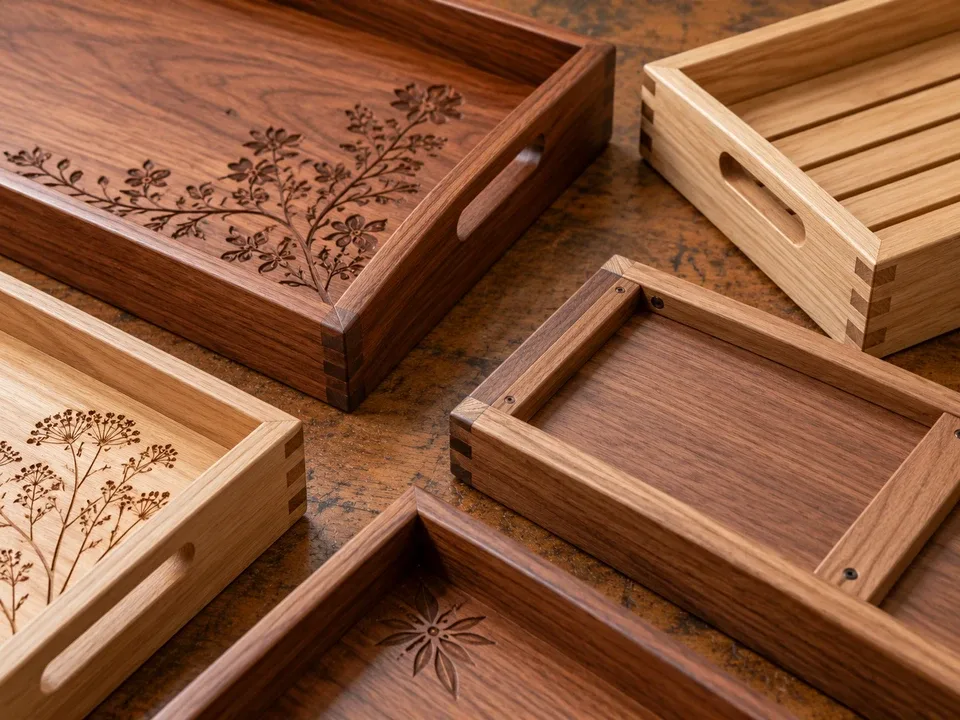
Record outside length, width and height, plus the usable inside area. The wall and handle shape can reduce the space available for products. Set the base thickness and acceptable flatness based on the use. For a tray that must fit a shelf or trolley, measure that space too. If trays need to nest or stack, test several production-representative samples, not just one.
Specify touch points
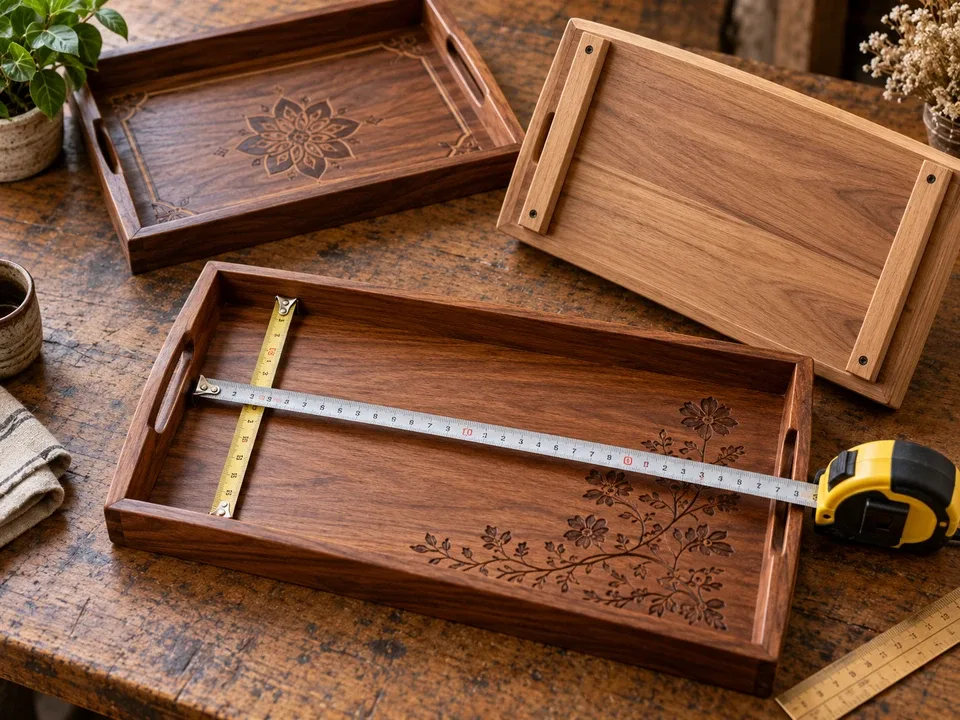
- Handles: cutout, attached, rope or none; assess grip with the intended load.
- Edges: rounded, square or raised; check the corners and underside for comfort.
- Base: single piece or assembled; inspect movement and visible seams.
- Finish: target color, sheen and acceptable grain variation using a physical reference.
- Branding: size and position visible during actual use.
- Packing: protection between stacked pieces and carton weight limits.
Avoid comparing prices until every supplier has priced the same version. A handle, anti-slip pad or custom retail sleeve may appear only in one quote. Ask for an itemized offer and an approved sample that becomes the inspection reference.
Details to settle before requesting a quote
| Buyer decision | Information to provide |
|---|---|
| Function | Serving, display or organizing; contents and representative loaded weight. |
| Fit | Outside and inside dimensions, handle clearance and installation space. |
| Acceptance | Loaded handling, level-surface stability, finish reference and carton configuration. |
Which dimensions belong on a tray drawing?
Include the outside footprint, usable base, rim height and handle projection. Add installation limits where the tray fits a drawer, rack or trolley. Identify the dimensions that control fit so the supplier can discuss appropriate tolerances.
Separate serving, display and organizer requirements
| Tray purpose | First sample decision | Common missing input |
|---|---|---|
| Serving | Loaded grip and stable set-down | Actual cups, plates and carrying method |
| Retail display | Visible labels and shopper removal | Packaged product sizes and shelf viewing angle |
| Organizer | Usable compartment layout | Largest objects and clear drawer opening |
| Hospitality amenity | Installation and cleaning workflow | Room surface dimensions and staff routine |
A single design can serve more than one purpose, but approve each proposed use. A countertop display sample does not by itself validate carrying. Ask the supplier to identify the use covered by its proposal so purchasing, merchandising and operations evaluate the same object.
Discuss your specification with Woodencraftfactory
Start with the three decisions above: function, fit, acceptance. Include your reference image or drawing, quantity by variant and destination. Mark unresolved details as “please advise” so the inquiry can identify the decisions still needed.
Request a Quote to discuss the proposed design and its feasibility, or review our custom wooden trays first.
Related reading: Sourcing custom wooden trays.