Custom Wooden Box Cost and MOQ: Compare Bulk Quotes
Compare custom wooden box cost, MOQ by variant, setup charges and packing scope with a practical supplier quotation worksheet.
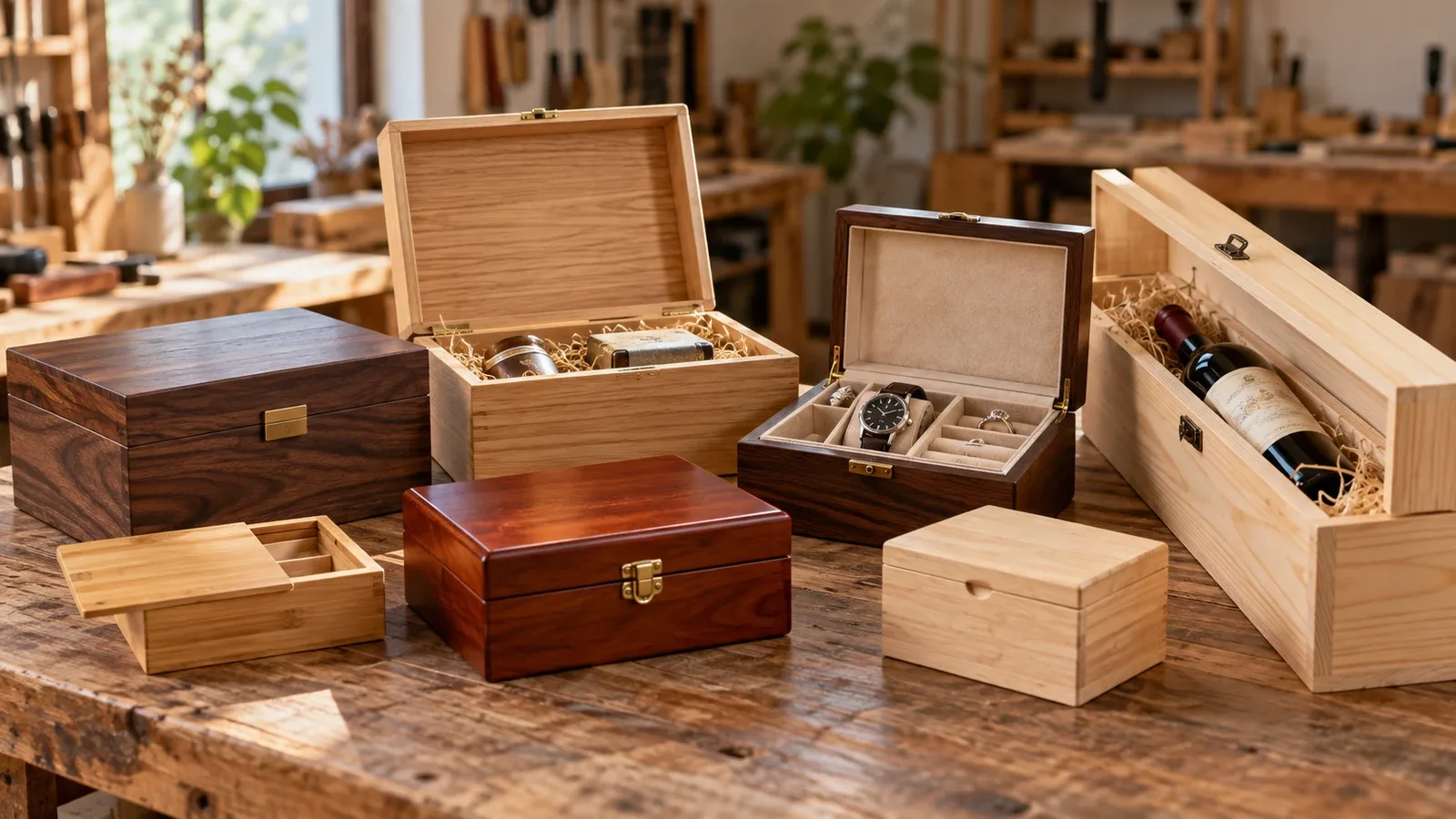
A custom wooden box quote should separate the wooden shell, finish, branding, insert and packing, plus one-time sample or setup charges. Compare identical specifications at realistic quantities. A price reduction obtained by changing the insert or packing is a different offer, not a like-for-like discount.
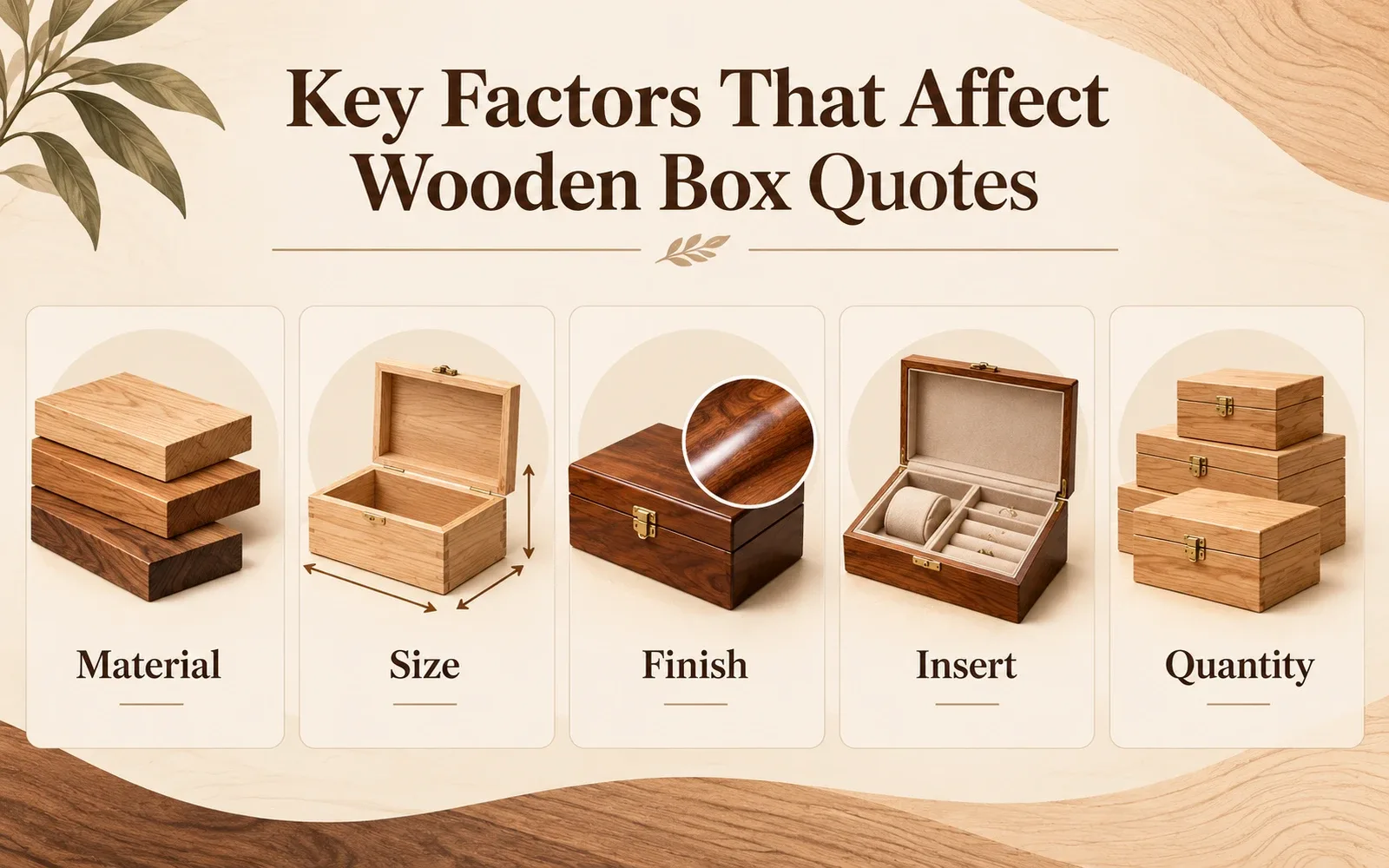
What changes the unit cost?
Material is one factor, but it is not the whole calculation. Wall thickness, lid style, number of machined parts, sanding, surface treatment, hardware, logo method and individual packing all add operations. A fitted interior can require its own sample and tooling. Freight packing affects carton volume as well as protection. Ask suppliers to list these items separately when comparing offers.
Quantity matters because setup work is spread across the run. A new print plate, cutting fixture or sample does not disappear at a higher quantity; its cost is allocated across more boxes. For a fair comparison, request quotations at the quantities you might actually order, such as an initial run and a repeat run. Ask whether a mixed-color assortment changes the minimum per color.
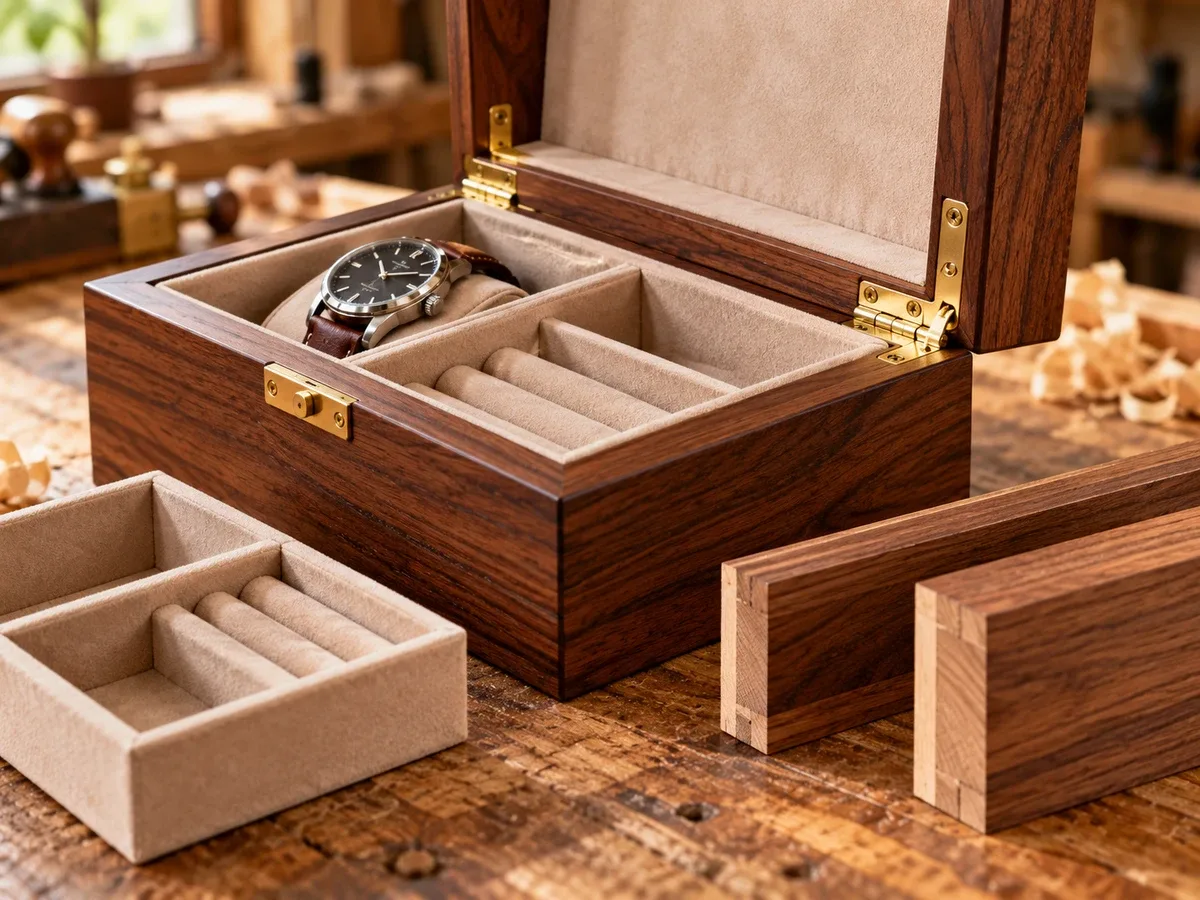
A practical MOQ conversation
There is no universal minimum order for custom wooden boxes. It depends on the design and the supplier’s production method. Instead of asking only “What is your MOQ?”, ask:
- What is the minimum per structure, size, finish and logo version?
- Can one order combine colors or insert designs?
- Which changes trigger new setup charges?
- Can the supplier quote a pilot run and a replenishment run separately?
Be cautious of a low unit price that excludes the sample, branded inner packaging or the export carton. Request a landed-cost comparison using the same shipping basis and destination for every quote.
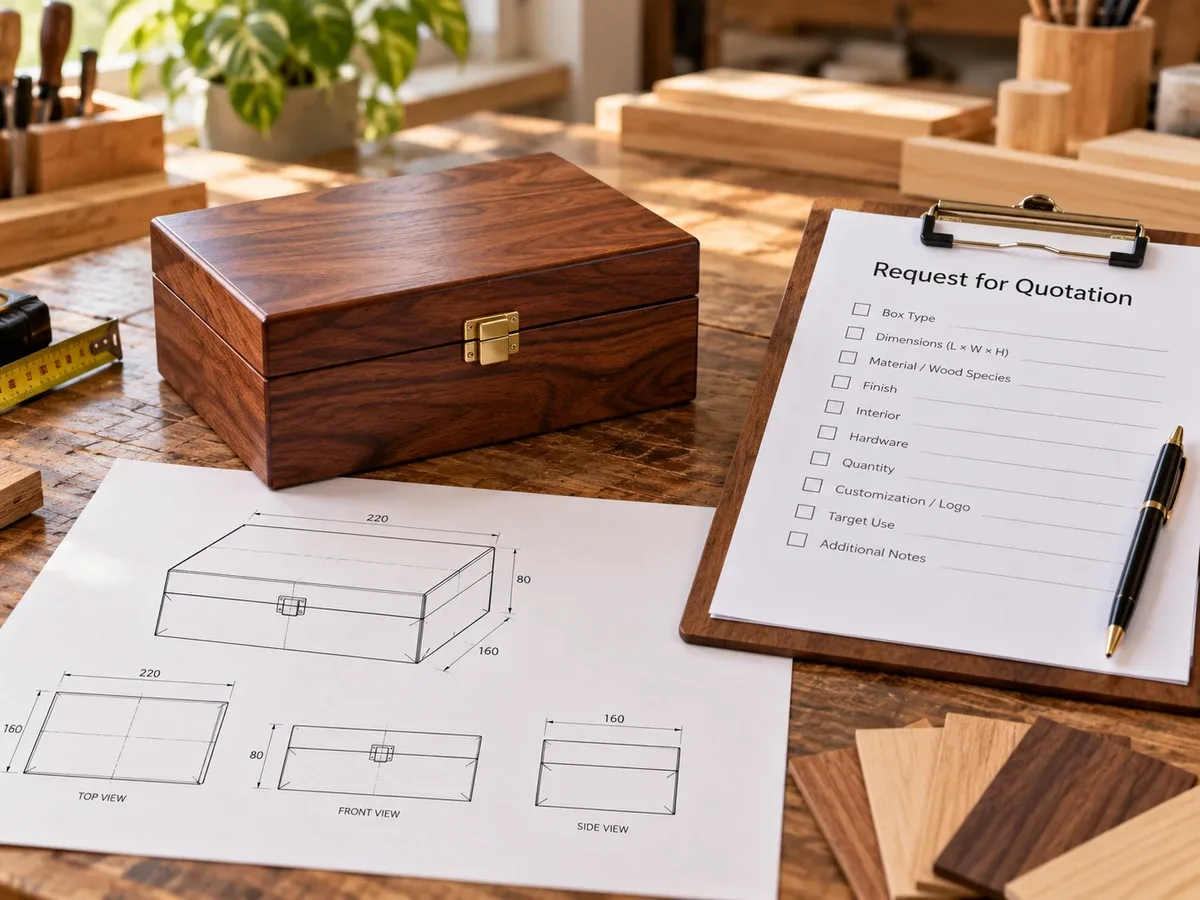
Send a quote-ready brief
Include the product placed inside the box, outside and inside dimensions, target material or finish, opening style, logo artwork, insert requirements, quantity by variant, retail packing and delivery country. A reference photo helps, but it cannot replace measurements. Mark any dimensions that must be exact for product fit.
Details to settle before requesting a quote
| Buyer decision | Information to provide |
|---|---|
| Baseline version | One drawing revision with material and finish, or a clearly stated request for alternatives. |
| Quantity breaks | Initial and repeat quantities by size, color and artwork version. |
| Cost scope | Shell, insert, logo, retail pack, master carton and one-time charges listed separately. |
Can I compare quotes before choosing the wood?
Yes, if each supplier prices the same baseline and lists material alternatives separately. Keep the size, contents, finish and packing constant. Otherwise you cannot tell whether a lower price comes from efficient production or a reduced specification.
Related purchasing decisions
Custom Wood Product MOQ: Ask by Design, Color and Pack Variant
Ask for a custom wood-product MOQ by design, size, finish, artwork and pack version. Provide realistic initial and repeat quantities. Discuss shared components or simpler variants as explicitly priced alternatives, so a lower minimum does not quietly change the product specification.
| Buyer decision | Information to provide |
|---|---|
| Variants | Design, size, color, logo and pack combinations. |
| Quantities | Pilot, initial and repeat units by variant. |
| Alternatives | Shared materials or finish with changes and charges identified. |
Can I add several small variants to meet one MOQ? Only if the supplier agrees which variants can share the run and pricing basis. A combined order total does not automatically satisfy minimums for each color, structure or print setup. Confirm the variant matrix in the offer.
Custom Wooden Gift Range Cost Planning: Compare the Complete Sellable Unit
Compare custom wooden gift costs at the complete sellable-unit level: product, finish, branding, accessories, retail pack and handling. Use actual per-SKU quantities and separate one-time charges. Let the buyer’s own logistics and finance data supply transport and margin assumptions rather than applying a universal target.
| Buyer decision | Information to provide |
|---|---|
| Unit scope | Product, accessory, branding, retail pack and assembly. |
| Quantity | Realistic units per SKU and sample/setup charges. |
| Buyer costs | Actual freight, receiving and channel assumptions supplied by the buyer. |
How can a common package reduce complexity? A shared sleeve, carton or finish can simplify purchasing if it fits every proposed SKU. Test size extremes and show any tradeoffs in the quote. Standardization is useful only when the complete retail unit still works.
A quotation worksheet that exposes missing scope
Use one column per supplier and one row per cost item. Mark an omitted item as ‘not confirmed’, never as zero. The comparison is incomplete until both parties confirm whether it is included.
| Cost row | What to compare |
|---|---|
| Wooden shell | Same material description, finished dimensions and closure |
| Interior | Same insert, lining and accessory count |
| Brand treatment | Same artwork size, location and finish sequence |
| Retail unit | Same sleeve, label, wrap and assembly responsibility |
| Shipment pack | Same carton configuration and quote delivery basis |
| One-time work | Sample, fixture, artwork setup and conditions for reuse |
For an illustrative comparison, suppose one offer includes the lined box and a printed sleeve, while another prices only the shell. The second price is not a saving until the missing components are quoted. Ask for an unchanged baseline and a separate cost-reduced version. This lets the buyer choose tradeoffs knowingly instead of discovering them in the sample.
Use your own freight and import estimates when comparing total acquisition cost. Divide recurring order costs by the actual sellable quantity, then show one-time development costs separately. A low per-piece quotation does not remove those development costs.
Discuss your specification with Woodencraftfactory
Start with the three decisions above: baseline version, quantity breaks, cost scope. Include your reference image or drawing, quantity by variant and destination. Mark unresolved details as “please advise” so the inquiry can identify the decisions still needed.
Request a Quote to discuss the proposed design and its feasibility, or review our custom wooden boxes first.
Related reading: Wooden gift box buying considerations.