Wooden Wine Boxes Wholesale: Sizes, Inserts and Branding
A procurement guide to bottle fit, internal support, closures, branding and packing for wholesale wooden wine boxes.
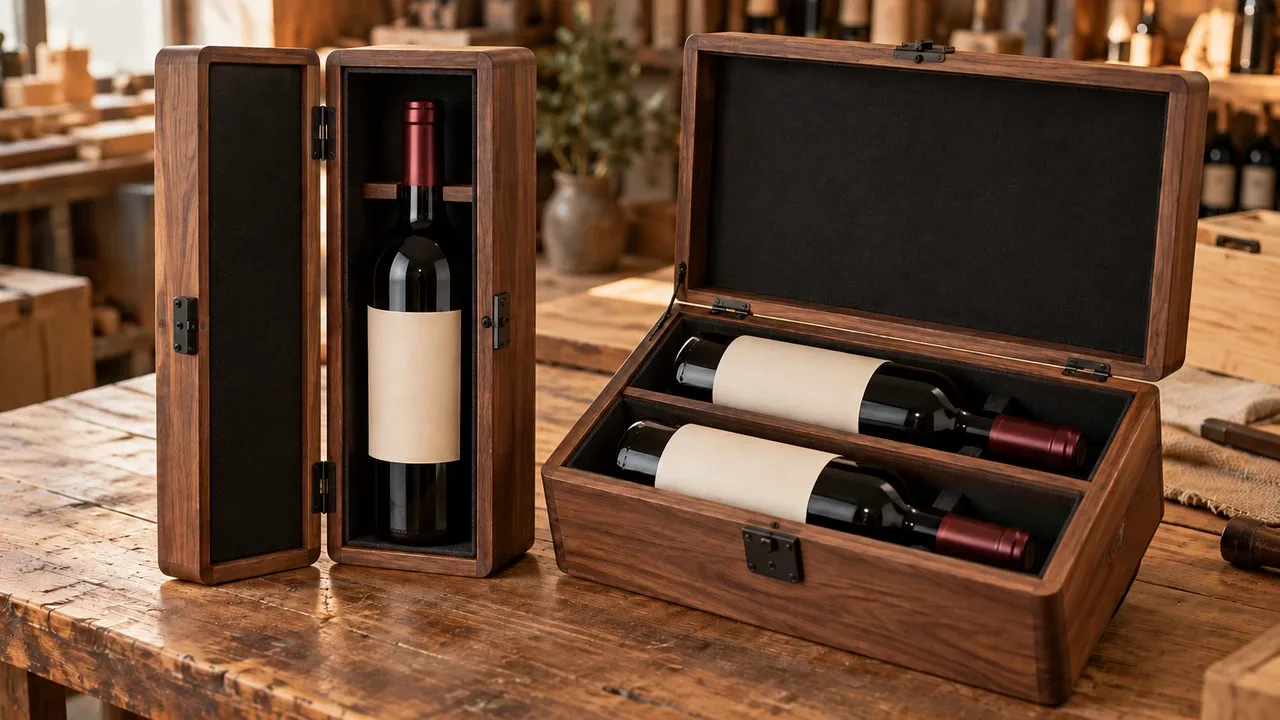
For wholesale wooden wine boxes, specify the actual bottle envelope, filled weight, bottle count, retention points and removal path before choosing external box dimensions. Approve the box with the reference bottle installed. A nominal bottle capacity does not establish shoulder, cap or label clearance.
Start with the bottle and the unboxing moment
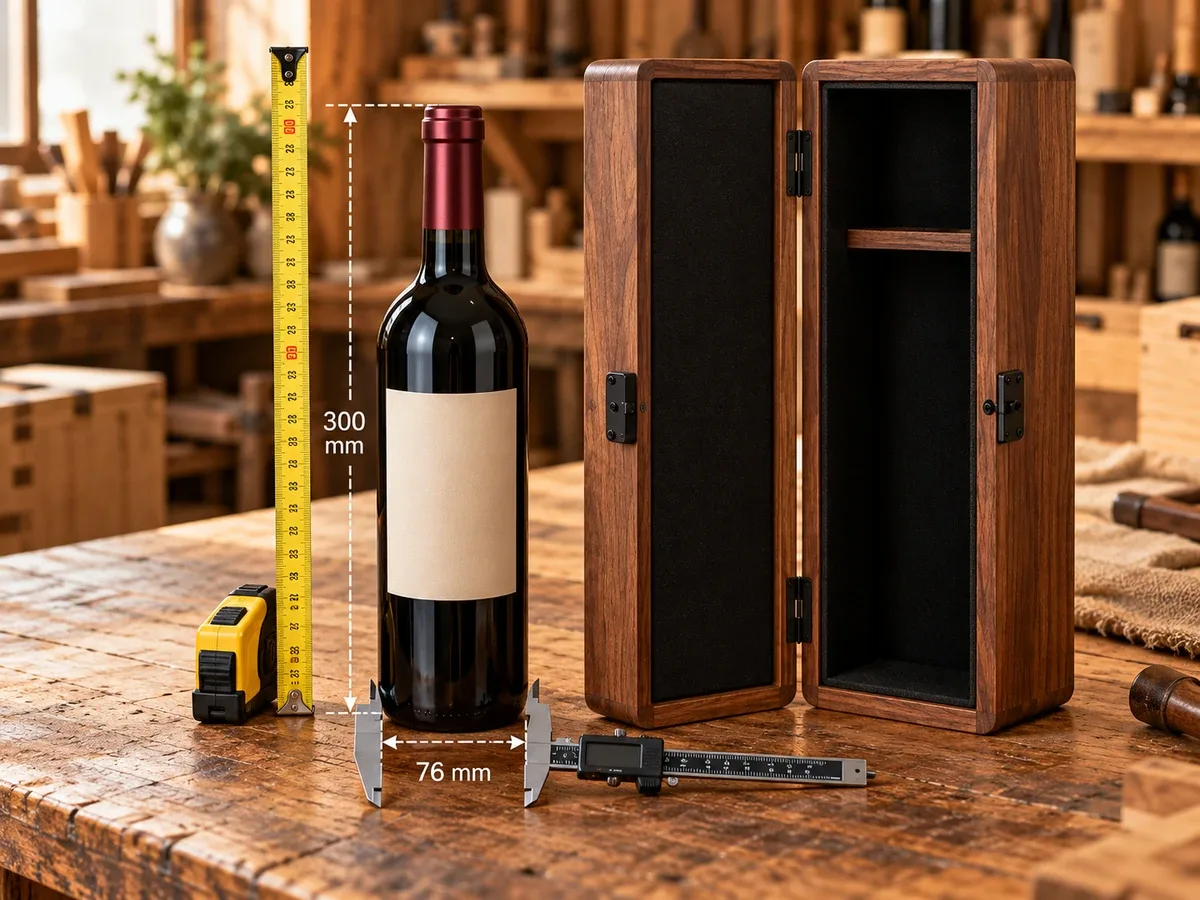
Record bottle height, maximum body diameter, shoulder width and any label area that must remain visible. Decide whether the box will hold one bottle, two bottles or a mixed gift set. Consider whether the recipient lifts the bottle vertically, slides it out or opens a hinged lid. This determines the clearance and access space required.
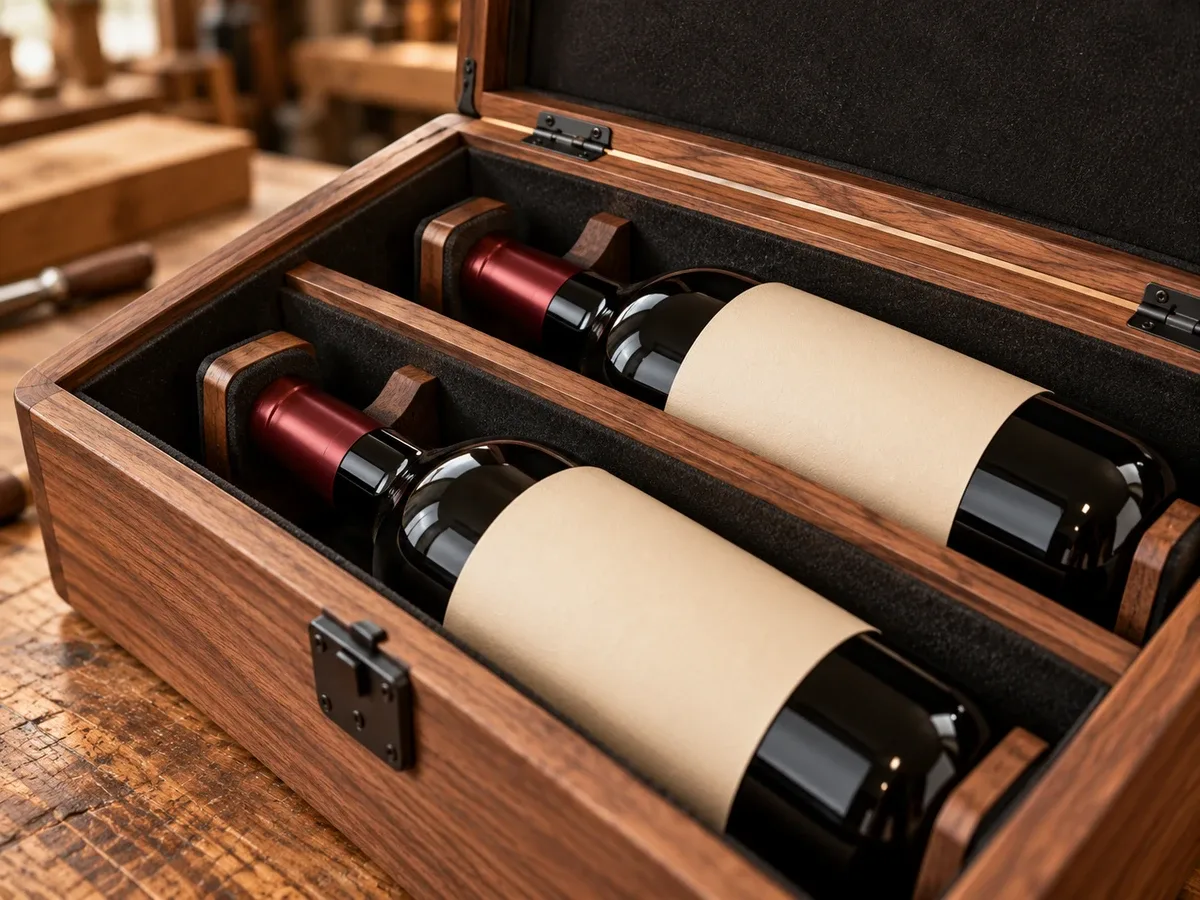
The insert has two jobs: keep the bottle from moving and make removal comfortable. Options may include shaped board, molded or cut foam, fabric-covered supports and wooden dividers. Ask for an assembled sample using the actual bottle, not an empty box photographed alone. Shake and handle the closed sample in the way a parcel might be handled; check whether the bottle touches hardware or the lid.
Choose the construction deliberately
Sliding lids can create a clean presentation and avoid external hinges. Hinged lids allow a wide display opening but introduce hardware and alignment requirements. Carry handles may help gift use, yet they must be evaluated with the loaded weight. If the box is intended for a premium campaign, compare the appearance of engraving, printing and applied branding on the actual material, rather than approving a digital mockup only.
What should the wholesale quote include?
Specify the bottle model, box dimensions, insert material, closure, logo location, finish, quantity per design, individual retail packing and master-carton requirements. Ask whether the bottle itself is supplied by you for sample development. Confirm what the quote covers: sample work, production boxes, inserts, individual packaging and shipment preparation.
Details to settle before requesting a quote
| Buyer decision | Information to provide |
|---|---|
| Bottle reference | Maximum diameter and total height with closure; a physical bottle when available. |
| Presentation | One bottle, multiple bottles or a gift set; horizontal or upright removal. |
| Pack approval | Filled sample plus protective shipping pack, identified by bottle version. |
Can one wine box fit several bottle shapes?
It may, but a shared box often needs different inserts. Test each bottle profile in its assigned insert and confirm that the lid closes without contacting the cap. Keep the outer-box and insert version codes separate for replenishment.
Bottle-fit approval record
| Check | Approve with the filled reference bottle |
|---|---|
| Overall envelope | Body, shoulder and closure clear the box and lid |
| Support | Insert restrains the bottle at agreed contact points |
| Removal | A hand or ribbon can lift the bottle without catching the label |
| Presentation | Brand and label face the intended viewing direction |
| Variant control | Each bottle and insert combination has an identifier |
If the buyer has not finalized the bottle, request a provisional construction quote and keep the internal layout open. Locking a cavity around a guessed bottle size can create rework in both the insert and wooden shell. The final approval should identify the bottle version, not merely ‘one-bottle wine box’.
Discuss your specification with Woodencraftfactory
Start with the three decisions above: bottle reference, presentation, pack approval. Include your reference image or drawing, quantity by variant and destination. Mark unresolved details as “please advise” so the inquiry can identify the decisions still needed.
Request a Quote to discuss the proposed design and its feasibility, or review our custom wooden boxes first.
Related reading: Wooden gift box buying considerations.