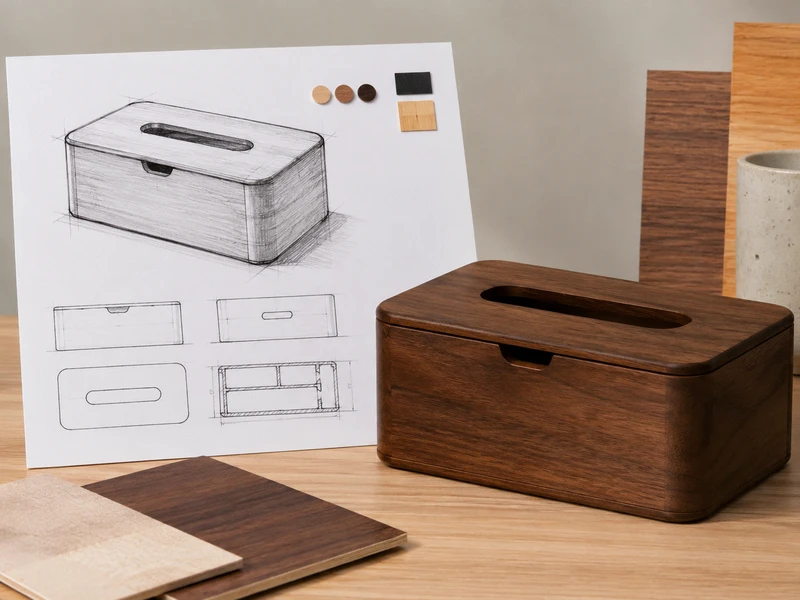
When a buyer asks for a custom wooden box, the first question is usually not about size or price. The real challenge is whether the structure, finish, lining, and packing method can work together in bulk production. A sample that looks perfect in photos can fail in mass production if the hinge tolerance is wrong, the velvet lining shifts, or the magnetic closure loses strength after 500 cycles.
In custom wooden craft production, the gap between a good sample and a consistent bulk order is where most suppliers fail. This guide covers what to evaluate before choosing a wooden box manufacturer — from material selection and interior fitting to export packaging and quality control.
Popular Box Structures
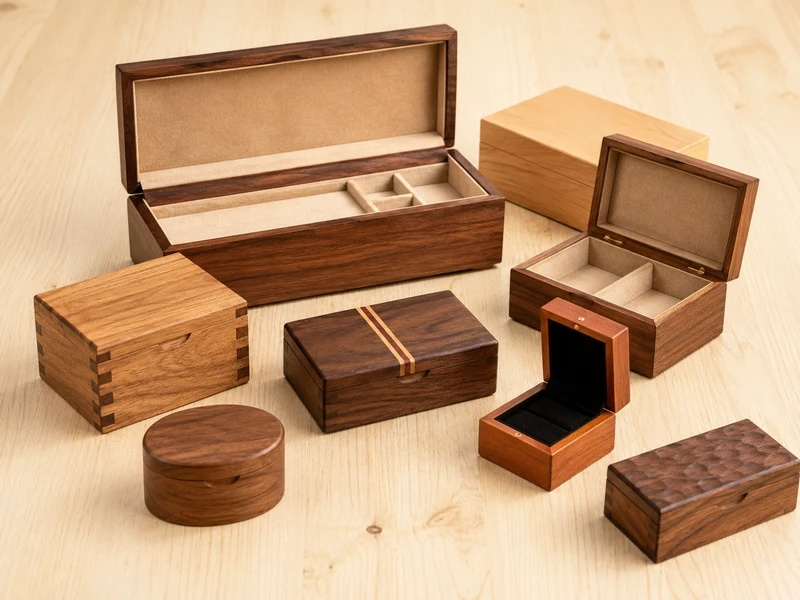
Before contacting a supplier, it helps to know which box structure fits your product. Each structure has different production requirements and cost implications:
- Hinged lid boxes — the most common structure for jewelry and gift packaging. Hinge quality varies widely between suppliers. Ask about hinge material (brass, steel, or concealed) and test open/close cycles on samples.
- Sliding lid boxes — clean, modern look. The lid must slide smoothly without being too loose. Tolerance matters — a 0.5mm gap difference changes the feel completely.
- Magnetic closure boxes — premium feel for high-end retail. Hidden magnets create a satisfying snap-close. Magnet strength must be consistent across the entire order.
- Drawer boxes — box-within-a-box design. Popular for jewelry sets and multi-item gift sets. More complex to produce — requires precise alignment between inner and outer boxes.
- Compartment boxes — internal dividers creating separate sections. Layout must be customized to your specific products. Foam inserts or fabric-covered dividers hold items in place.
- Display boxes — window cutouts, clear lids, or open-face designs for retail. Showcase products while keeping them protected.
Material Selection Matters More Than You Think
The wood type determines the look, feel, durability, and price of your boxes. During sample development, buyers often discover that the wood they assumed would work is not the best choice for their specific design.
- Pine — affordable, lightweight, good for painted and distressed finishes. Not ideal for precision hinges — the soft wood can wear around hinge holes over time.
- Beech — hard, durable, fine-grained. Best for premium jewelry boxes. Holds hinges and hardware securely. Slightly higher cost.
- Birch — smooth surface, excellent for laser engraving. Consistent grain makes it predictable for mass production.
- Bamboo — sustainable, strong, popular for eco-conscious brands. Takes stain well but can be harder to paint evenly.
- MDF — cost-effective for large runs with painted finishes. Not suitable for exposed edges or natural finishes.
A good supplier will recommend the best material based on your product, target market, and budget. If they only offer one wood type, that's a limitation — not a recommendation.
Interior Fitting: Where Quality Shows
The interior of a wooden box is where buyers notice quality differences most. A box with a poorly fitted foam insert or uneven velvet lining immediately looks cheap, regardless of how good the exterior looks.
- Velvet lining — soft velvet or suede in black, grey, burgundy, or custom colors. Must be glued evenly without bubbles or wrinkles.
- Foam inserts — custom-cut EVA, PE, or PU foam. The cut must match your product exactly — too tight damages the product, too loose lets it shift.
- Dividers and trays — wooden or fabric-covered dividers. Removable trays add versatility but must fit precisely.
- Custom compartments — individually shaped slots for specific products like rings, necklaces, or watches.
Practical Example: Jewelry Box with Velvet Lining
A jewelry brand recently needed 2,000 hinged-lid boxes (10×8×4cm) with burgundy velvet lining and a custom foam insert for a ring and necklace set. The first sample from their previous supplier had uneven velvet corners and foam that was too soft — the jewelry shifted during shipping. After switching to a supplier with better interior fitting capabilities, the second sample had perfectly tensioned foam and heat-bonded velvet corners. The difference was visible immediately.
Logo and Branding Options
Your logo is the first thing your customer sees. Five professional branding methods are available, each suited to different wood types and brand styles:
- Laser engraving — permanent, natural burned look. Works best on light-colored woods like birch and beech.
- Screen printing — good for multi-color logos on flat surfaces. Cost-effective for large runs.
- UV printing — photo-quality reproduction. Works on any surface including dark woods.
- Hot stamping — gold or silver foil. Premium look for luxury packaging.
- Metal logo plates — raised brass or stainless steel plates. The most premium option.
What to Look for in a Supplier
MOQ and Pricing Transparency
Minimum order quantities vary from 300 to 1,000+ pieces. Ask for price breaks at 500, 1,000, 5,000, and 10,000 pieces. Watch for hidden costs: tooling fees for custom structures, sampling charges, and packaging costs that appear late in the process.
Sample Process
Never commit to a bulk order without a physical sample. A reliable manufacturer produces 1-3 samples, provides photos before shipping, and allows 1-2 rounds of adjustments. The approved sample becomes the quality standard for bulk production — inspect it carefully.
Quality Control System
Ask about inspection checkpoints: raw material moisture and defect checks, dimensional verification, hinge and hardware function testing, finish consistency, and final appearance inspection before packaging.
Export Packaging
Wooden boxes are fragile. Each box should be individually wrapped with corner protectors. Inner cartons need dividers between layers. Outer cartons must be export-grade for sea freight. Ask for packing photos from previous shipments.
Have a custom wooden box project? Send us your box size, closure type, lining requirement, logo method, quantity, and destination country. We will recommend the right structure and material — and provide a detailed quote within 24 hours.
Request a QuoteWhat Information to Send for a Quote
- Box dimensions — length, width, height (internal or external).
- Box structure — hinged lid, sliding lid, magnetic, drawer, or compartment.
- Wood type — or describe your requirements for a recommendation.
- Interior requirements — lining type, insert shape, dividers.
- Logo method and placement — engraving, printing, stamping, or plate.
- Finish — natural, stained, painted, lacquered.
- Quantity and packaging — individual wrap, retail-ready, or export bulk.
- Destination country — for shipping cost and compliance.
FAQ
Can I get a sample before committing to a bulk order?
Yes. We produce 1-3 samples with your specifications. Sample lead time is 7-10 working days. Sample cost is $50-150 depending on complexity, and is fully refunded against your first production order of 500+ pieces.
What if my box design includes multiple materials?
That's common. A wooden box with velvet lining, foam insert, metal hinges, and a magnetic closure involves four different materials. We source and assemble all components in-house. The quote will break down material costs separately so you can see where the budget goes.
How do you ensure hinge quality across a large order?
We test hinge function on every box during production. Hinges are checked for alignment, smooth operation, and closing force. We use jig fixtures to ensure consistent hinge placement across the entire batch.
What's the typical lead time for a custom box order?
Sampling takes 7-10 working days. After sample approval, mass production takes 30-45 working days depending on quantity and complexity. Total from inquiry to delivery is approximately 6-10 weeks.
Can you match a box I already have?
Yes. Send us the physical sample by courier. We will reverse-engineer it, create production specifications, and produce matching samples. This process takes 10-15 working days.
Related Resources
Explore our custom wooden boxes product page for detailed specifications, or visit our capabilities page to learn about our manufacturing process. If you are planning a bulk gift box order, see our custom wooden gift boxes wholesale guide. For packaging structure and insert details, read our custom wooden packaging boxes guide. You can also read our guides on preparing for OEM manufacturing, laser-cut wood products, and sourcing custom wooden trays.