Export Packing for Wooden Crafts: Preventing Transit Damage
Plan individual protection, carton layout, labels and a pack-out sample for wooden crafts shipped internationally.
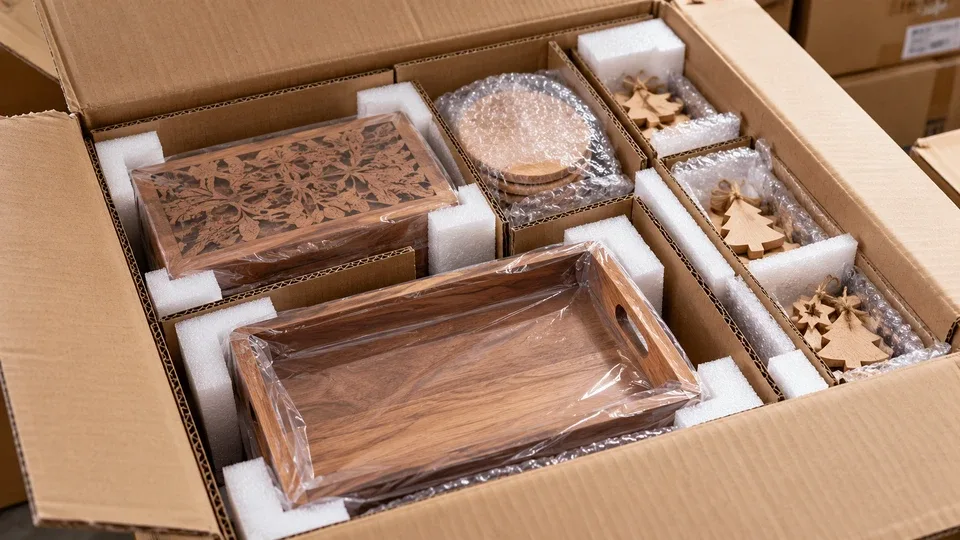
Export packing for wooden crafts should control contact, movement and identification through the intended shipping route. Define individual protection, dividers, carton count and labels, then assess a complete pack-out. A protective material or carton description alone does not prove the finished product will arrive undamaged.
Map the likely damage points
Check exposed corners, projecting handles, printed surfaces, glass or metal components and any loose cords or hardware. Decide which items need individual sleeves, tissue, separators or shaped support. Packaging material should protect without leaving marks or residue on the finish. Inspect the product after unpacking, not only the appearance of the packed carton.
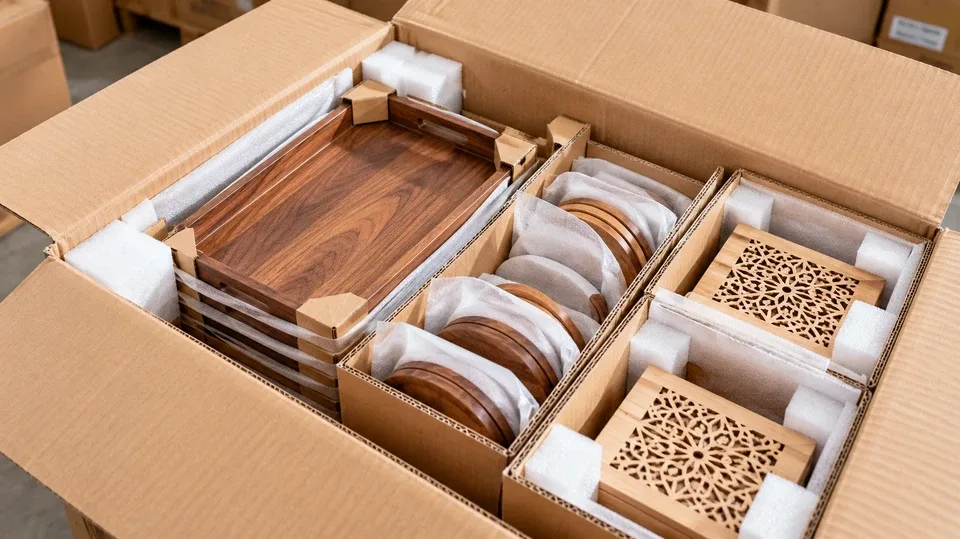
Define the carton plan
State pieces per inner pack and master carton, orientation, dividers, maximum carton weight acceptable to your warehouse and the labeling information required at receipt. A tightly filled carton is not automatically safer: pressure on raised details or lids can damage the contents. A half-empty carton can allow movement. Request a complete pack-out sample at the proposed quantity.
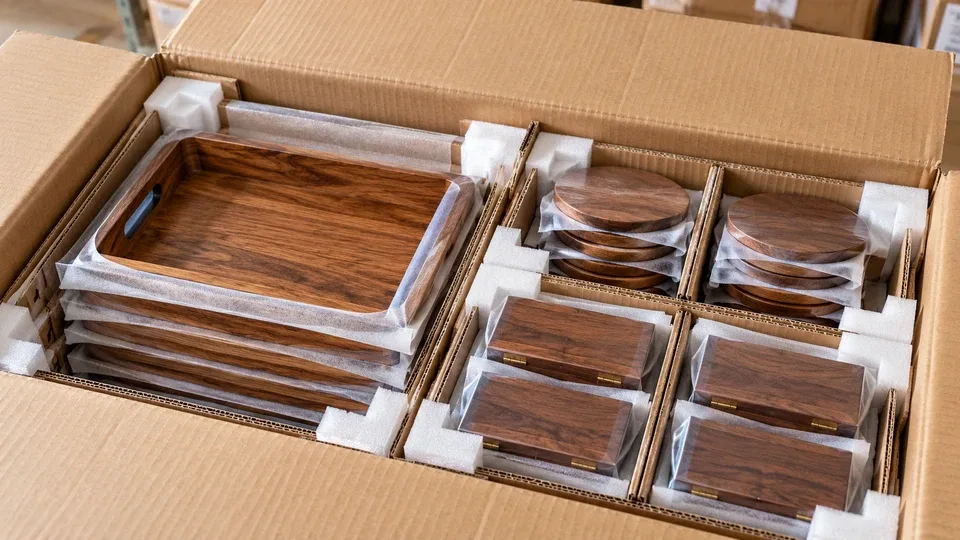
Match the test to the shipment
Ask your supplier and logistics partner which handling or transit tests are relevant for the route and channel. Parcel fulfillment, palletized freight and store distribution create different risks. Do not claim that a box is “export-safe” without defining the pack and how it was assessed. Record any damage found in a trial shipment and revise the packing instructions before scaling.
Keep the paperwork aligned
The packing list, SKU labels and physical carton contents should agree. Confirm whether mixed cartons are allowed. If special marks or declarations apply to your destination, verify those requirements with the freight and compliance professionals responsible for the shipment.
Details to settle before requesting a quote
| Buyer decision | Information to provide |
|---|---|
| Product risks | Corners, finish, handles, inserts and loose accessories. |
| Pack recipe | Individual wrap, separators, orientation and units per carton. |
| Route | Handling channel, receiving limits and agreed packed-sample assessment. |
Is retail packaging enough for international shipping?
Not necessarily. Retail packaging may prioritize display rather than transit protection. Evaluate the complete shipment configuration with the supplier and logistics partner, including onward parcel handling if relevant. Record which layer protects corners, surfaces and moving parts.
Related purchasing decisions
Wooden Products in International Shipping: A Buyer Climate Checklist
Plan wood-product shipping around the actual construction, route and storage conditions. Identify fit-sensitive parts and finished surfaces, then agree packing and arrival checks. Keep the approved pack and observations from a representative shipment; a generic climate-proof claim does not define acceptable performance.
| Buyer decision | Information to provide |
|---|---|
| Sensitivity | Fit-critical panels, closures and visible finish. |
| Route | Transport channel, storage assumptions and receiving conditions. |
| Acceptance | Agreed arrival measurements and packed-unit review. |
Does changing the destination require a packing review? Review the plan if transport, storage or receiving conditions change. The same product can face different handling and dwell times. Ask the responsible supplier and logistics team which parts of the prior assessment remain applicable.
Three layers to approve
| Layer | Question the buyer should settle |
|---|---|
| Product protection | What prevents corners, finishes and components from rubbing or moving? |
| Retail presentation | What must look undamaged when the customer first sees the unit? |
| Transport configuration | How are units arranged, labeled and handled on the actual route? |
A retail sleeve may serve the second layer without providing the first or third. Conversely, protective wrap can arrive intact while leaving unacceptable marks on the finish. Inspect unpacked products after a relevant handling trial and keep photographs of the exact packing recipe.
For mixed shipments, record item counts and any buyer-approved substitutions. Ask who is responsible for repacking at the destination if the original shipment goes to a distribution center before individual parcel delivery.
Discuss your specification with Woodencraftfactory
Start with the three decisions above: product risks, pack recipe, route. Include your reference image or drawing, quantity by variant and destination. Mark unresolved details as “please advise” so the inquiry can identify the decisions still needed.
Request a Quote to discuss the proposed design and its feasibility, or review our manufacturing capabilities first.
Related reading: Wooden craft sample development.