Wooden Craft Quality Control: Box and Tray Inspection Checklist
Set inspection points for wooden boxes and trays, from fit and finish to first articles, branding and packed-unit acceptance.
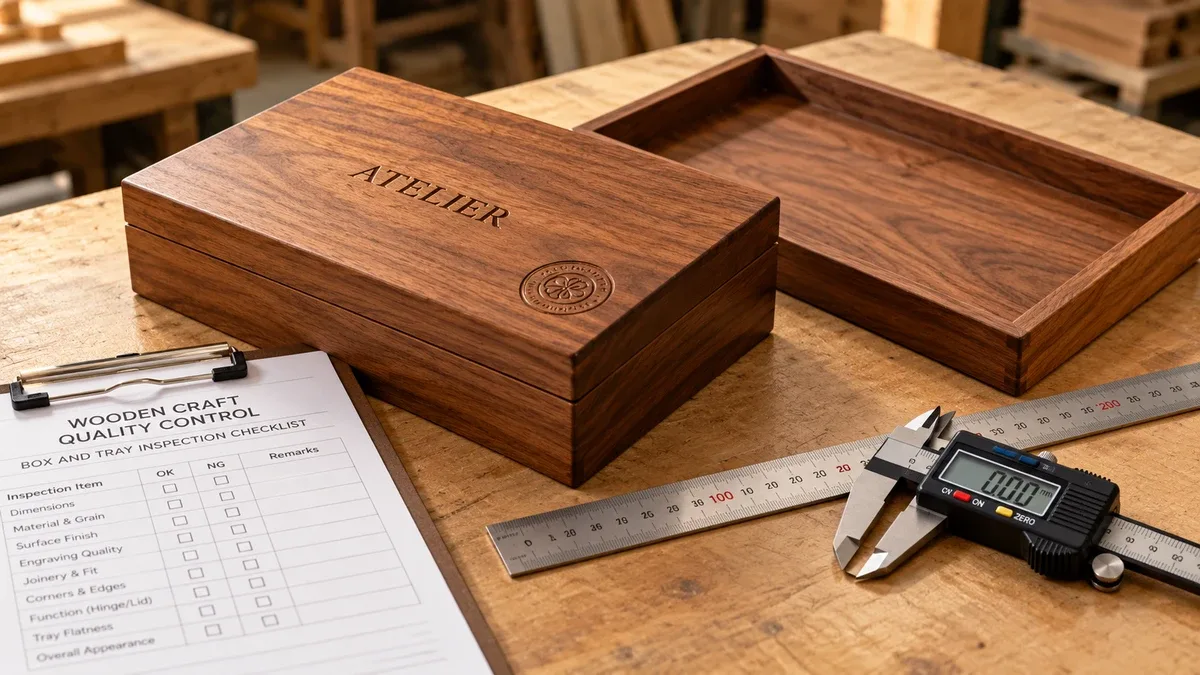
A useful wooden-product quality checklist separates functional failures from appearance variation and packing errors. Tie each critical measurement, finish reference and moving-part check to an approved sample and drawing. Agree the inspection method before production so buyer and supplier apply the same acceptance criteria.
Define critical, major and cosmetic issues
Start with the product’s function. A box lid that will not close, a tray handle that shifts or an ornament hole that tears during normal handling should not be treated as minor appearance differences. Separate those issues from visible scratches, coating marks, color variation and packaging scuffs. Decide which faces are prominent in normal use and photograph examples of acceptable and unacceptable results where possible.
Inspect the production sequence
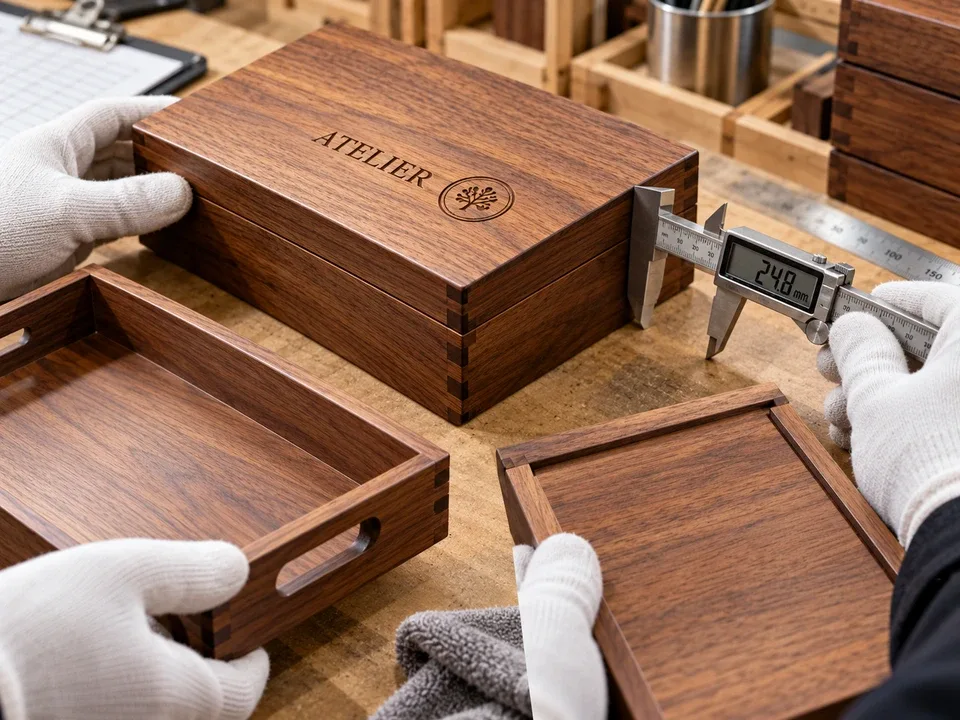
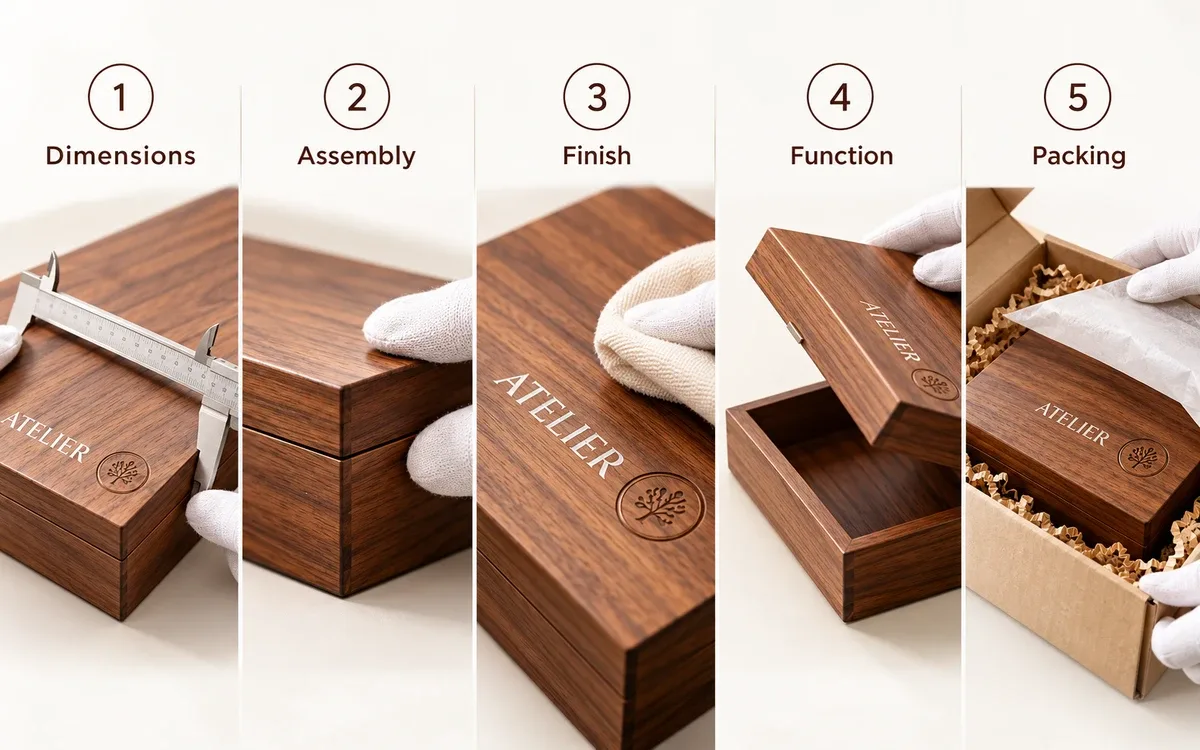
Incoming material, machined components, assembly, finish and final packing are different checkpoints. Ask the supplier what can be measured before assembly and what can only be judged on the finished product. For custom pieces, verify dimensions against the approved drawing, then test moving parts and accessories. Inspect labels and carton counts as well as the objects inside.
Build a one-page checklist
- Approved drawing and sample revision match the purchase order.
- Key dimensions and product fit meet the agreed tolerance.
- Lid, handle, hanger or other functional features work as intended.
- Visible surfaces meet the agreed finish and defect examples.
- Logo placement and artwork version are correct.
- Individual protection, quantity and carton labels match the packing instruction.
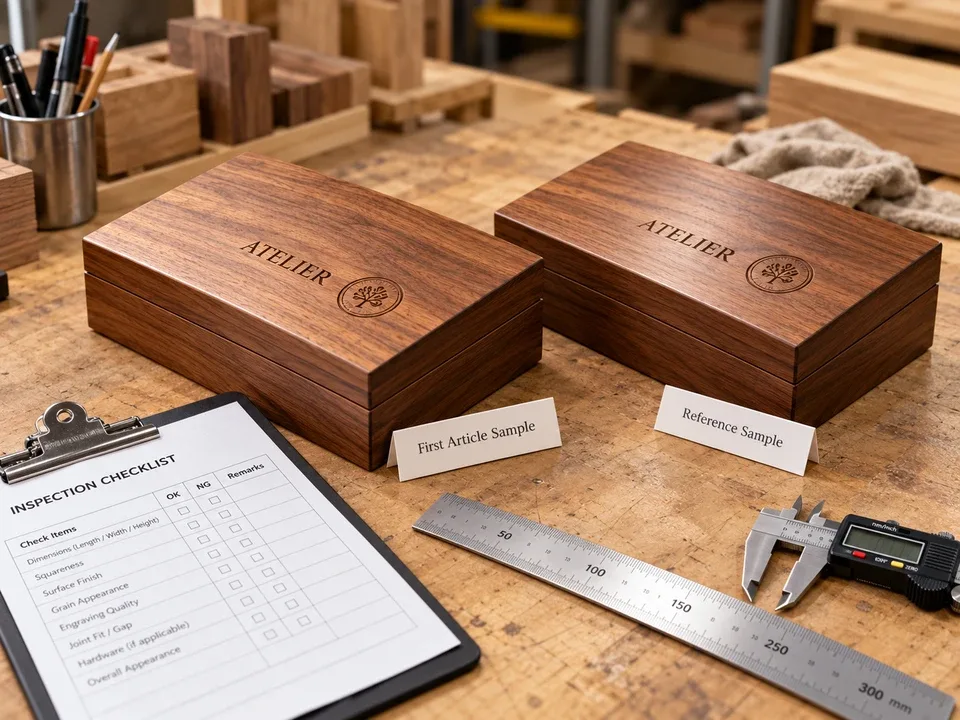
Agree on the inspection method and sampling approach with the supplier or independent inspector before production. A percentage-based acceptance rule should be chosen for the actual product and contract; no generic number is appropriate for every issue. Keep dated photographs of the approved sample and any approved deviation.
Details to settle before requesting a quote
| Buyer decision | Information to provide |
|---|---|
| Reference | Approved drawing, sample identifier and any permitted deviations. |
| Checks | Critical dimensions, function, surface examples, logo and pack count. |
| Decision | Inspection responsibility, issue classification and correction process. |
Is an approved photo enough for a quality standard?
Photos help define visible defects but cannot establish fit, opening feel or grip. Keep measurements and functional checks alongside the physical reference. Use photos under consistent lighting for the appearance features they can actually show.
Related purchasing decisions
Wooden Tray Bulk Orders: Inspection Points Buyers Can Actually Use
A tray inspection checklist should cover usable dimensions, stability, loaded function, finish, branding and the delivered pack. Define checks for the actual serving, display or organizer use. Agree acceptance criteria against the drawing and approved sample before the bulk order starts.
| Buyer decision | Information to provide |
|---|---|
| Fit | Critical outside and usable dimensions with measurement points. |
| Function | Level-surface stability, loaded handling and stacking if required. |
| Delivered condition | Finish reference, logo accuracy and pack-out review. |
Can appearance inspection establish carrying performance? No. A visual check cannot establish grip, balance or handle behavior with contents. Add a representative loaded-use check agreed for the product, and keep appearance criteria separate from functional acceptance.
First-Article Inspection for Custom Wooden Products: What to Approve
First-article inspection checks whether the intended production setup reproduces the approved wooden-product design. Compare critical fit, function, finish, artwork and packing with the final reference. Document deviations and who can authorize continuation before the rest of the batch follows the same setup.
| Buyer decision | Information to provide |
|---|---|
| Reference | Approved sample, drawing, artwork and pack revision. |
| Checks | Critical dimensions, function, finish and complete pack. |
| Release | Decision owner, deviation record and work allowed while pending. |
Does first-article approval replace final inspection? It addresses a different stage. It checks the production starting point; later checks assess whether the run and pack remain consistent. Agree both responsibilities based on the product and order, rather than assuming one sample covers the entire shipment.
Make an inspection sheet an instruction
| Feature | Reference | Decision to agree before production |
|---|---|---|
| Contents fit | Product sample and dimensioned drawing | Required clearance and measurement method |
| Lid or handle | Approved assembled sample | Relevant operating or loaded-use check |
| Finish | Physical references and defect photos | Visible surfaces and accepted variation |
| Logo | Final-size artwork and placement drawing | Legibility, orientation and alignment |
| Packed unit | Approved pack-out | Correct SKU, protection and component count |
A checklist that only says ‘check quality’ does not establish a pass condition. Add the reference and decision for each important feature. Choose any sampling or acceptance method for the actual order with the responsible buyer or inspector. Avoid copying numeric limits from an unrelated product.
Keep an exception log with the issue, affected units, proposed correction and approval owner. This makes a correction traceable without pretending that inspection can replace a clear specification.
Discuss your specification with Woodencraftfactory
Start with the three decisions above: reference, checks, decision. Include your reference image or drawing, quantity by variant and destination. Mark unresolved details as “please advise” so the inquiry can identify the decisions still needed.
Request a Quote to discuss the proposed design and its feasibility, or review our manufacturing capabilities first.
Related reading: Wooden craft sample development.